
I recently wrote a personal essay for Business Insider about my dad, his freedom and his free will despite his illness.
My dad has always been part of my life, so writing about him publicly was something I thought about carefully. But there are experiences that become more understandable when we talk about them honestly, and dementia is one of them.
The piece is not really about a diagnosis. It is about a person, a family and the strange mixture of love, frustration, and even laughter that can come with caring for someone whose life is changing.
I’m glad I wrote it.
My Dad Is Still a Free Man
Yesterday I saw a story in the Daily Mail about a care home where a resident with dementia was being treated very badly. There was footage of a member of staff trying to force him into the shower when he clearly didn’t want to go. It was distressing to watch.
Stories like this make me realise something all over again: despite all the challenges, we are 100 per cent certain about our decision not to put my dad in a care home or medicate him simply to make life easier.
My dad is still a free man, and his life is still a good life.
Of course, it isn’t always easy. There are difficult days and worrying moments, and we have had to adapt to a lot of things. But his life is still, in many ways, business as usual.
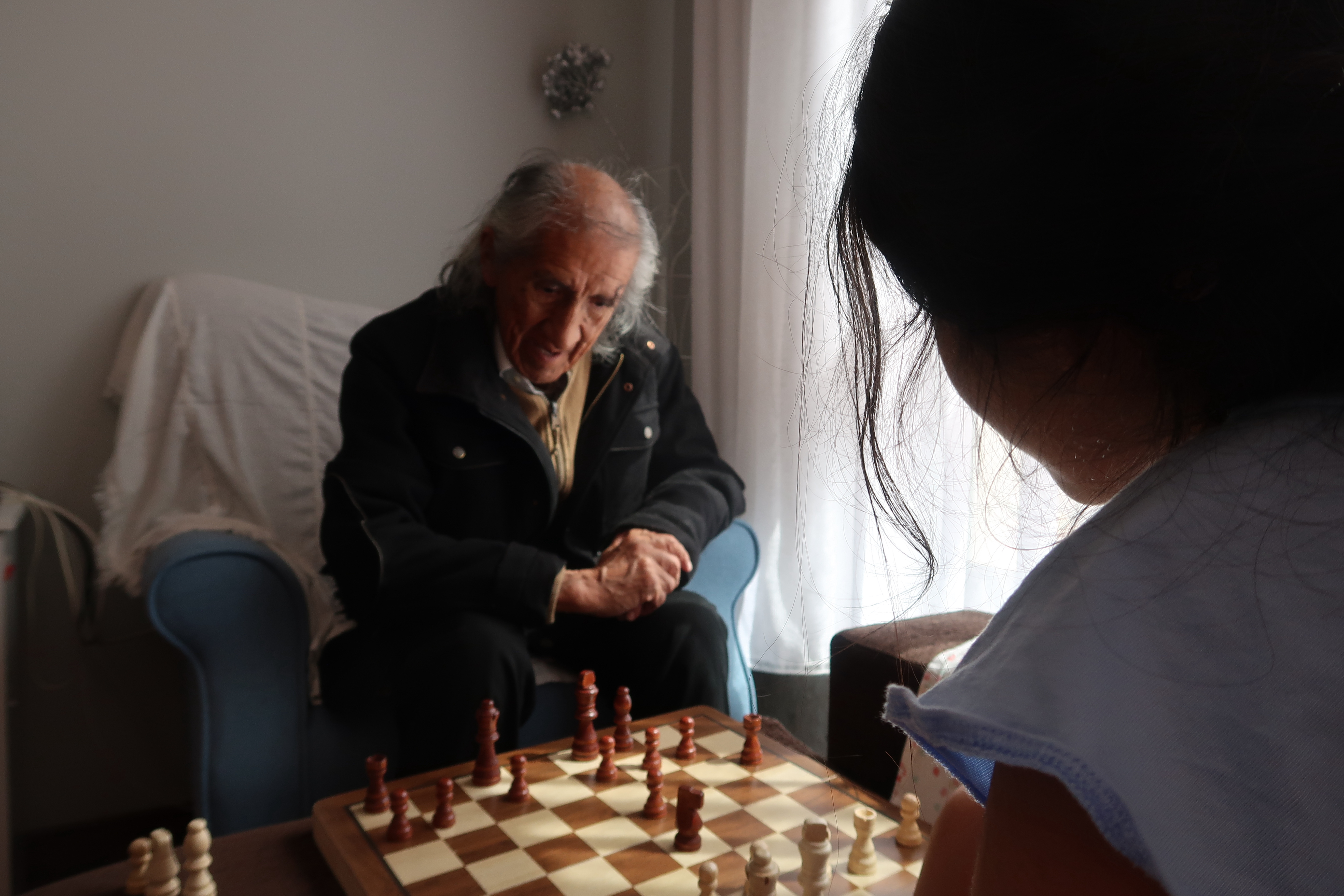
He is at home. He has his family around him. He goes for walks. He has his familiar surroundings and the things he has always had. He hasn’t been removed from his own life because his memory has changed.
And I think that matters.
People with dementia may forget things, become confused or need more help, but they are still people. They still have preferences. They can still dislike something. They can still want to do something — or not want to do something.
For us, keeping my dad at home has meant keeping his freedom and his dignity.
There is also something else I have become very aware of through all this: the so-called sandwich generation.
Many of us are caught between caring for our ageing parents while also raising our own children and trying to keep our own lives going. It can be an exhausting position to be in, particularly when dementia is involved.
I’m thankful for my own health and a strong mind, which allow me to keep doing all the things I need to do every day. I know that not everyone is as fortunate, and I think about that often.
In our family, my mum is the main carer for my dad, but it affects all of us. You don’t simply switch off from worrying about your parents because you have your own children, work and responsibilities. They are still your parents, and you are still their daughter.
And despite everything, my dad doesn’t seem to miss much of what he had before.
Well, there is one thing he definitely misses.
A dog.
And if you read my story about our dogs, you’ll understand why.
Read my essay in Business Insider


What a lovely post.I loved reading about your very smart dad. x
LikeLike
Thanks Ofelia, glad you enjoyed reading the article. He is quite the character and we wouldn’t have it any other way.
LikeLike
Amancay, thank you for this. ‘Keeping my dad at home has meant keeping his freedom and his dignity’ is the sentence everything should be measured against. I work on home sensing technology for seniors living independently, and the lesson I keep learning is that the tools that truly help are the ones the older person barely notices: nothing to wear, nothing to charge, nothing to learn. They should quietly support the life your dad already has, his walks, his familiar surroundings, rather than reorganize it. Wishing you and your family more good days at home.
LikeLike
Thank you so much. Nothing beats the care of a familiar face and the company and comfort they offer, but I do believe technology will be key in helping older people keep their dignity and, where possible, remain at home in familiar surroundings rather than having to move into a care home.
I’ve met many older people over the last few years, including people who are still incredibly sharp mentally, and one thing I hear again and again after they have spent a couple of nights in hospital for whatever reason is: “I want to go home.” They can become agitated and confused in unfamiliar surroundings, and medication is how that distress is managed.I have seen people being tied to their beds so they don’t leave in the middle of the night.
That’s why I think home is key. Home is familiar. A care home isn’t. Every family and every situation is different, but for me, a care home should be the last option when there is simply no safe way to keep someone at home. Hopefully technology will help more and more people stay in their home. I don’t think humanoid robots are the answer yet — particularly for people with dementia. But technology that helps someone stay connected to their family is different. Being able to contact a family member when you’re away, for example, without relying on an older person hearing and answering a phone, could make a real difference.
LikeLike