
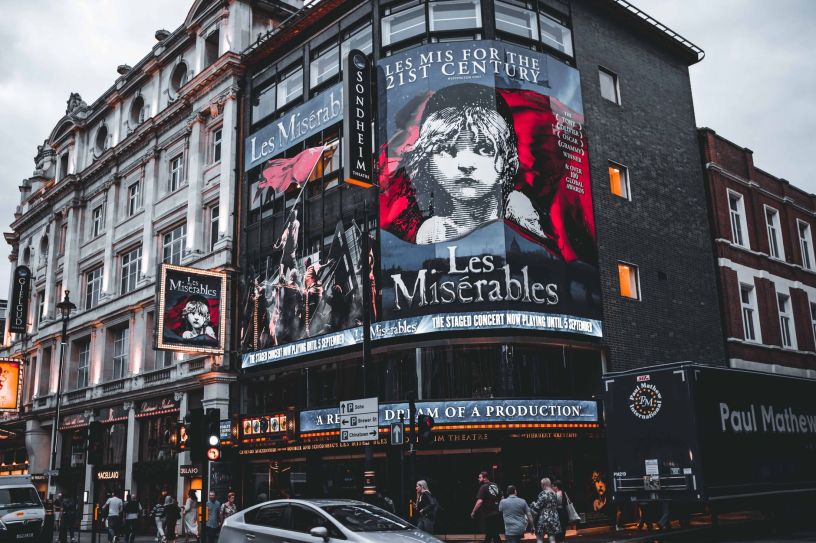
We tell children to be confident, to be themselves, not to compare their appearance with somebody else’s. And then, in one particular corner of the entertainment industry, a measuring tape can decide whether they are allowed through the door. Is it time we questioned the measuring tape when it comes to child actors?
Children do not all grow at the same rate. Some are tiny for their age. Some are tall. Some have long legs, some are stockier, some are already taller than their parents. Some look younger than they are and some look considerably older.
That is childhood.
Yet, going by some West End casting requirements, children still seem to have to be a cute little thing. But why can’t the stage, and to some extent the film and TV industry, accept that they can also be a cute tall thing?
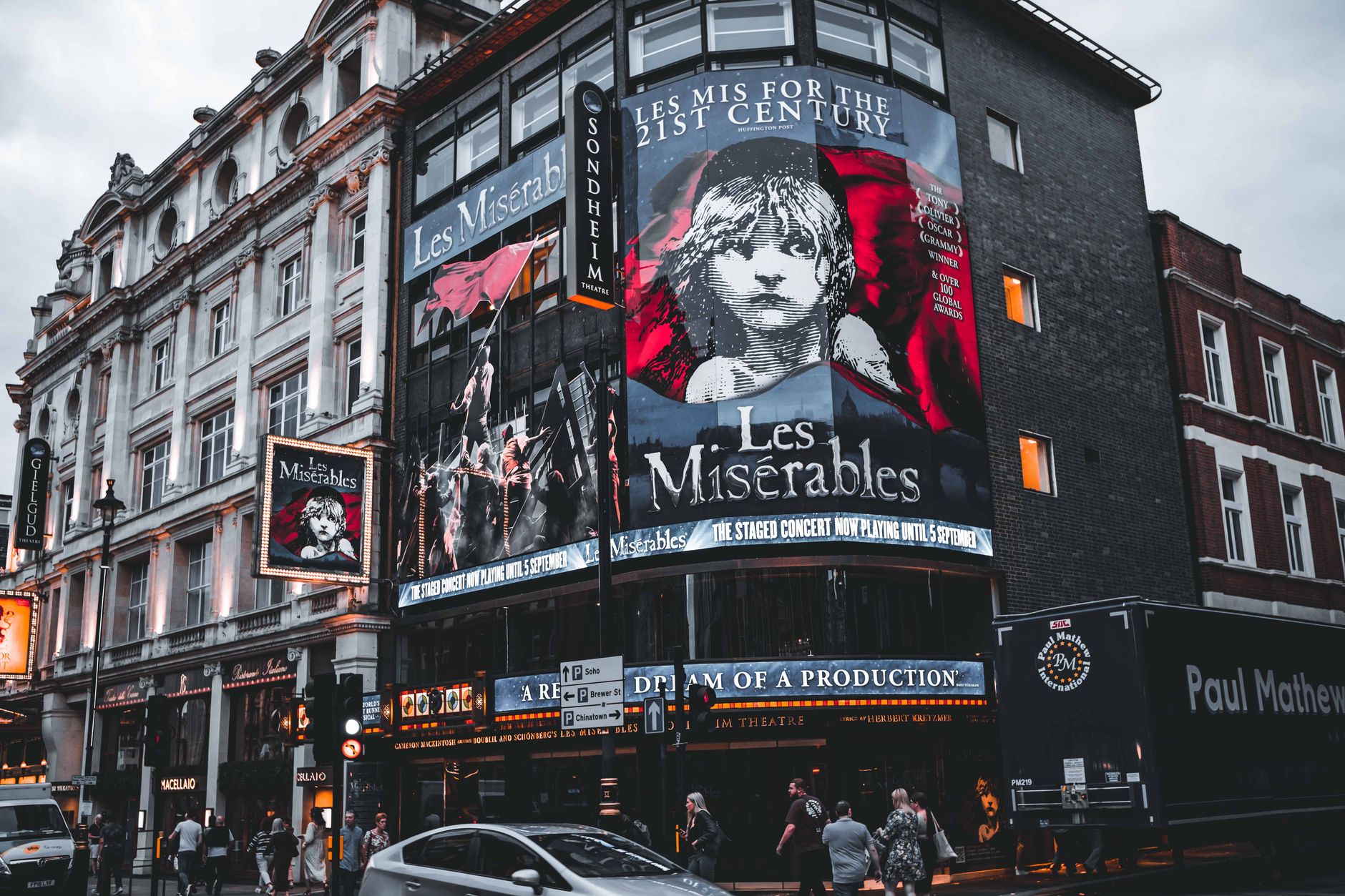
When children are cast in these industries, height can become part of the initial filter. Spotlight, the UK casting platform used by professional actors and casting professionals, says that height is especially important for young performers, noting that West End shows often require children to be within very specific height ranges for particular roles. In an interview with Spotlight, Bonnie & Betty, a children’s agency representing young performers in television, film, photography and theatre, puts it even more bluntly: “Height is probably the number one thing, especially with stage work.”
There is nothing wrong with a production having genuine practical requirements. A particular role may require children to be within a certain physical range. But when a child can be ruled out before they have even had the chance to perform, it is worth asking where the line is between a genuine requirement and an outdated idea of what a child should look like.
Imagine you are only ten or eleven years old. You have watched Matilda the Musical in the West End and loved it. Or perhaps you have only seen the film or clips online because your parents cannot afford the trip to London and the pricey tickets. Either way, you dream of playing Matilda on the West End.
The casting is open. Wonderful! But there is one thing that will stop you. One thing that will not even allow you to apply.
Your height. Isn’t that discrimination, plain and simple, in 2026? And isn’t asking a child how tall they are, in some ways, like asking how much they weigh? We would rightly question why a child’s weight should determine whether they are allowed to play a character. So why should their height?
Surely their age, talent and ability to bring a character to life should count for more than a few centimetres.
This is the question I have been asking myself after seeing the casting requirements for Matilda the Musical and other musicals, and after talking to parents whose children are tall. We live in a time when the entertainment industry talks a lot about inclusion, yet when it comes to children, adults are still deciding what a child should look like — and it does not always reflect how varied children actually are.
The Royal Shakespeare Company’s 2025 UK and Ireland tour casting requirements specified that children auditioning for the role of Matilda had to be aged 9–12 and under 4ft 3in tall. The RSC’s casting call also placed height limits on the children playing her classmates: boys had to be under 4ft 10in and girls under 4ft 6in.
And 4ft 3in may not sound particularly short until you put it into the context of how differently children grow.
According to the World Health Organization’s height-for-age reference for girls, 129.5cm — roughly 4ft 3in — is around the median height for a girl aged eight and a half. In other words, a height that is perfectly ordinary for a child who is not yet nine can be the maximum permitted height for a child auditioning to play Matilda.
By nine, ten, eleven or twelve, some girls will naturally be taller than that. And this is not exclusive to Matilda.
The 2026 Grinch casting at Leeds Playhouse specifies Cindy Lou Who as aged 7–10 and under 4ft 2in, while the children’s ensemble is under 4ft 10in. Compare that with Octagon Bolton’s 2025 A Christmas Carol, which sought children aged 9–13, of any gender, with a maximum height of 5ft.
The characters and stories are different, of course. I am not suggesting that every production should have the same height requirements. But why does one production require a child of that age to be under 4ft 2in, while another is happy to consider children aged 9–13 up to 5ft?
What is it about one character that makes height so important, while another child’s role allows a much wider range?
And then there is Billy Elliot, where the height difference becomes even more interesting.
A recent casting call for Billy and Michael asks for boys aged 9–14 who are under 5ft, while Debbie, a girl aged 9–12, must be under 4ft 8in. Why should a boy of fourteen be allowed to be taller than a girl of twelve simply because he is playing a boy and she is playing a girl?
Girls can be taller than boys. Anyone who has spent time in a school classroom knows this. There are nine-year-old girls taller than some eleven-year-old boys, twelve-year-old boys shorter than girls in their class, and every possible combination in between.
Children do not grow according to neat little boxes labelled “boy” and “girl”.
Yet these assumptions about how boys and girls should physically look can become so normalised that we barely notice them. And perhaps that is part of the problem. If we keep teaching children — and ourselves — that the boy should be taller and the girl should be smaller, it is hardly surprising that those ideas follow us into adulthood too. Even something as ordinary as a woman dating a shorter man can still attract a snide comment or a raised eyebrow.
Maybe these casting rules are not responsible for those wider stereotypes. But they are part of a culture in which we repeatedly tell children what boys and girls are supposed to look like.
Where does an artistic preference end and unnecessary exclusion begin? Could the impression of a smaller, younger child not also be created through costume, staging, blocking, set design, lighting and the relative height of the adults around them?
And perhaps more importantly, does a taller child automatically stop being vulnerable?
I don’t think so. A tall ten-year-old is still ten regardless of height.
Theatre has always had conventions. Some are practical and artistic. Some are simply traditions that have been repeated for so long that we stop questioning them. Just because something has become a convention of casting, does that mean we should stop questioning it?
Especially when the person being excluded is a child.
Ironically, Roald Dahl’s Matilda is a child who refuses to accept that adults automatically know best. And yet, before a real child can even audition to play her, there is already a rule about what that child must physically look like.
Tim Minchin’s lyrics include the simple line, “And that’s not right.”
Perhaps that is the question we should be asking, because deep down, a measuring tape can be just as discriminatory as a set of scales.
Tall kids, time to challenge the status quo, just like Matilda!
The Lady of The World contacted the Royal Shakespeare Company for comment on the height requirements for its 2025 touring production of Matilda the Musical, but had not received a response at the time of publication.


