
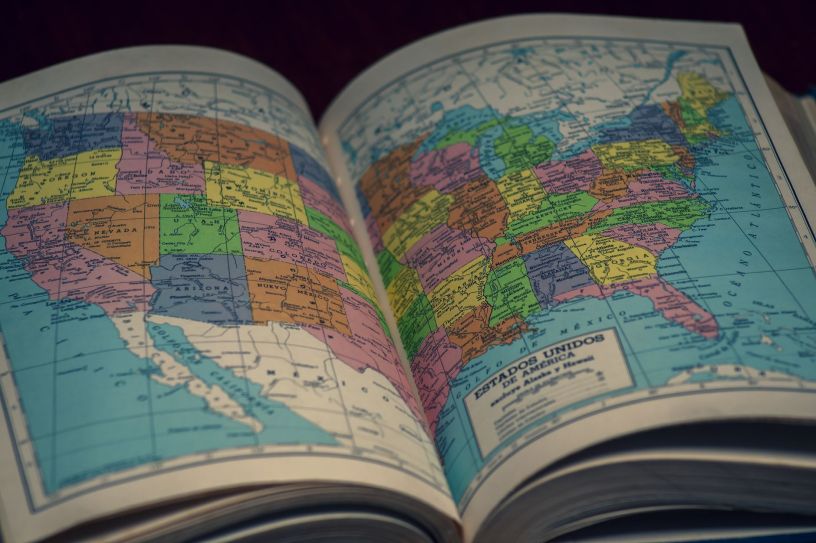
Spanish is often viewed as a European language, primarily associated with Spain. However, this perspective overlooks its deep and enduring presence across the Americas. From the time of Christopher Columbus’s voyages in 1492 to the present day, Spanish has been a defining linguistic and cultural force throughout the Western Hemisphere. The question of whether Spanish can be considered an “American” language invites us to reflect on the linguistic, historical, and cultural realities that shape our understanding of language identity.
The Historical Roots of Spanish in the Americas
Spanish arrived in the Americas with the colonization efforts of the Spanish Crown. By the 16th century, the Spanish Empire had established vast territories across North, Central, and South America, as well as in the Caribbean. Cities like Mexico City, Lima, Bogotá, and Buenos Aires became centers of Spanish colonial administration, culture, and language.
Through colonization, Spanish mixed with indigenous languages like Nahuatl, Quechua, and Guaraní, leading to a rich linguistic tapestry. Over centuries, Spanish evolved differently in each region, giving rise to distinct Latin American dialects that are as diverse as the cultures they represent. These developments highlight the deep-rooted presence of Spanish in the Americas, making it more than just a transplanted European language—it became an integral part of the continent’s identity.
Spanish is the second most spoken language in the world
Today, Spanish is the second most spoken language in the world by native speakers, and a significant majority of these speakers reside in the Americas. Over 20 countries in the Western Hemisphere, including Mexico, Argentina, Colombia, and Chile, have Spanish as their official language.
In the United States, Spanish holds a prominent place as the second-most spoken language. With over 41 million native speakers and an additional 12 million bilingual speakers, the U.S. has the second-largest Spanish-speaking population in the world, trailing only Mexico. Spanish is also increasingly studied as a second language, further embedding it into the cultural fabric of the country.
Spanish in the Americas is not merely a colonial remnant but a dynamic, evolving language shaped by centuries of cultural exchange. In many Latin American countries, Spanish incorporates words and phrases from indigenous, African, and other immigrant languages. For example, Mexican Spanish has been enriched by Nahuatl, while Caribbean Spanish shows African linguistic influences. These adaptations make Spanish in the Americas distinctly “American” in character.
Additionally, Spanish plays a central role in the cultural expression of millions of people. From literature and music to cuisine and religious practices, Spanish is a cornerstone of identity for countless communities across the Americas. Prominent writers like Gabriel García Márquez and Isabel Allende, who write in Spanish, have shared Latin American stories with the world, reinforcing the language’s connection to the region.
Spanish as an American Language
Considering its historical, cultural, and demographic significance, it is fair to argue that Spanish is as much an American language as it is a European one. It has been spoken in the Americas for over 500 years, longer than English in most parts of the continent. Its adaptation to local contexts, its role in shaping regional identities, and its continued prominence in both everyday communication and cultural production affirm its American identity.
While the term “American language” often evokes English due to its dominance in the United States and global influence, Spanish’s widespread use across the Americas makes it equally deserving of the title. In many ways, Spanish is a shared heritage of the Americas—a bridge connecting people across continents and generations.
Spanish’s journey from Spain to the Americas transformed it into a language deeply intertwined with the history and culture of the Western Hemisphere. Its enduring presence and influence in the Americas suggest that Spanish is not merely a European export but a truly American language, reflecting the complexities and diversities of the continents it has shaped. As we continue to celebrate linguistic diversity, recognizing Spanish as an American language can deepen our appreciation for the rich cultural mosaic of the Americas.

 Lady World Press