
As my child and I walked out of South Kensington station toward the Science Museum, I realised Wonderlab had been on my list of must-do experiences with her for ages — and now the moment had finally come to step into the wonder.
My curious daughter dreams one day of becoming a NASA astronaut, another day a painter or scientist, and the next of building rockets to explore other universes in search of life — her ambitions shifting as quickly as her imagination.When she was around three, her bedtime stories included a special gift from her uncle: Belka and Strelka, the famous space dogs. That’s how she first learned about Valentina Tereshkova, the courageous first woman in space, who orbited the Earth in 1963 and, decades later in her eighties, even visited the Science Museum to give an inspiring talk. Whenever she calls something “old,” I remind her: “Well, Valentina orbited the Earth at 26—over half a century ago!” Her love for experiments, alchemy, and all things scientific made Wonderlab the perfect destination.
From the moment we stepped in, I understood its reputation. Wonderlab doesn’t just display science—it invites you to touch it, play with it, and question it.
The design of the space itself immediately caught my attention, and when I looked further, I discovered that Wonderlab is a contemporary reinvention of the Children’s Gallery, first opened in 1931—a space originally designed for children to play, experiment, and discover.
What is Wonderlab?
Wonderlab is an interactive, immersive gallery designed to bring science and maths to life. It’s divided into several zones such as Matter, Space, Light, Sound, Electricity, Forces and Maths. Each area is filled with hands-on experiments and live demonstrations. Honestly, you could spend an entire day in Wonderlab alone, and it would still feel like there was more to discover.
My daughter’s eyes lit up as she watched water freeze into delicate ice shapes and created spiky patterns with ferrofluid, while mist swirled around us in clouds that danced whenever we touched or blew on them. At the Chemistry Bar, the Explainers turned ordinary materials into magic, showing how liquids react when mixed, stretched, or frozen, and filling the room with tiny bursts of color and surprise.

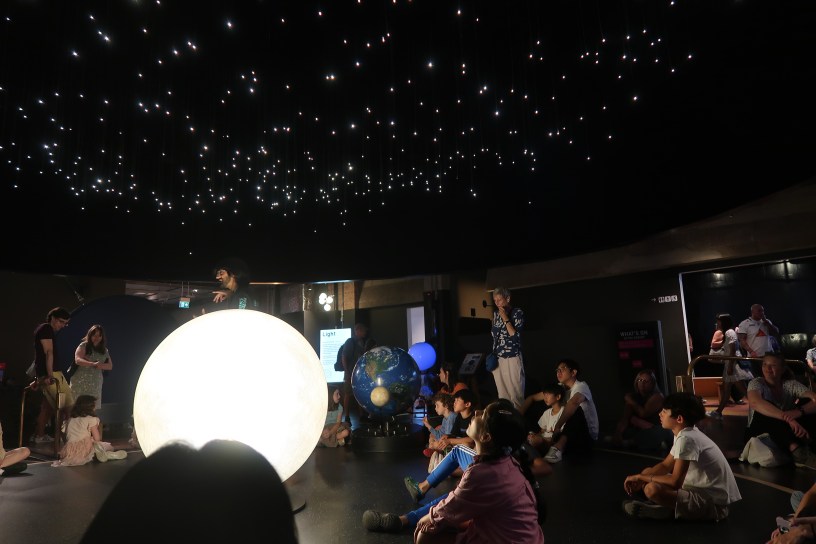
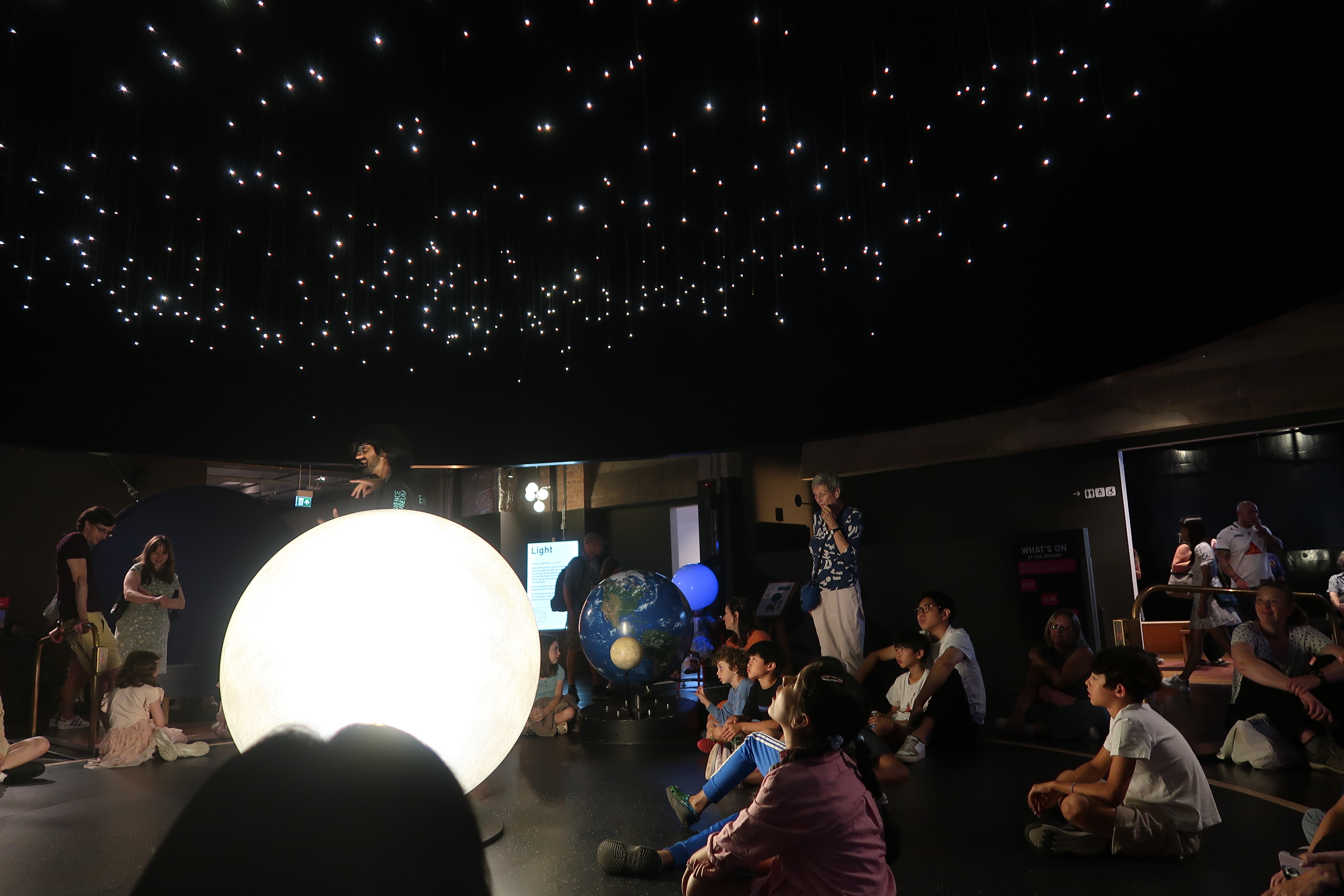
She couldn’t get enough of the Space Zone. It was her chance to show off every bit of space trivia she’s collected whenever the explainer tossed a question to the kids. The design is spectacular- a rotating solar system that children can ride while listening to the explainer’s fun commentary. No wonder the Space Zone feels like the heart of Wonderlab.

The thrill of electricity was next. My daughter’s jaw dropped as a bolt of lightning shot across the ceiling from a Tesla coil. In the Sound Zone, she experimented with waves and vibrations, fascinated to hear music through the bones of her skull and discover how subtle changes could alter what we hear.
Physics came alive in the Forces Zone. Here she had the chance to race down giant slides, testing friction firsthand, and experimenting with paper flying machines in the Flight Test.

Midway through, we joined one of the live shows. The one we saw was called Flash! Bang! Wallop! — a 20-minute burst of flames, explosions, and big laughs, all about why things burn.
Time slipped by. We stayed for about three hours, though my daughter would happily have stayed until closing. The Wonderlab staff, called Explainers, are engaging, patient, and really bring the science to life for kids.
Wonderlab is officially recommended for children aged seven to fourteen, which feels exactly right. My daughter is at the perfect age to dive in. Younger children can certainly enjoy plenty — especially the Maths Zone, with its logic puzzles and playful activities — but to really grasp what’s going on, seven and up is the sweet spot.
Walking out, I realised Wonderlab wasn’t just a day out. It was discovery, inspiration, and imagination rolled into one — the kind of experience that makes a child’s eyes light up and sparks questions long after you leave.
If your kids enjoyed the visit just as much as mine, there is the Wonderlab Plus website to continue the science fun at home.
Planning Your Visit (2026 Updated)
Entry to the Science Museum is free, but access to Wonderlab requires a separate ticket. Wonderlab now offers cheaper prices when you book early. Current ticket prices are:
- £17 Day Ticket (ages 4 and up)
- £24 Annual Pass for unlimited visits
- Children aged 3 and under enter free
Booking in advance is recommended to secure the best price. Tickets can be booked via the official Science Museum Wonderlab page.
Getting There
The Science Museum is located at Exhibition Road, South Kensington, London SW7 2DD, just a 5-minute walk from South Kensington station (District, Circle, and Piccadilly lines). Gloucester Road station is about a 15-minute walk. For step-free access, Knightsbridge station is 15–20 minutes away, or take the C1, 14, or 74 bus to South Kensington, then a 6-minute walk.
*This article was updated to reflect Wonderlab’s latest ticket pricing.


This sounds perfect for my kid who is a budding scientist . X
LikeLike
I can guarantee he will love it! x
LikeLike
Cool! the website you shared is fantastic. I will check it out as a Christmas treat
LikeLiked by 1 person
It is a great day out with the kids and a visit to the Wonderlab makes for a lovely Christmas treat. There is also a cafe inside the museum and you can leave ,have your lunch and reenter the lab again. I went in summer so only stayed for three hours but in winter, it is just the perfect place.
LikeLike
My son would love this! Definitely on my to-do list when we’re next in London
LikeLike